AGENT CONSOLE/
QUICK ACCESS
ACTIONS
↑↓NavigateOpenEscClose
AI INFRASTRUCTURE & SYSTEMS

MASOUD
ZEYNALI

AI Infrastructure·AI Agents & MCP·Systems Engineering
::Senior AI Engineer — Agents, MCP & Infrastructure

Nearly two decades of enterprise IT and infrastructure engineering experience, combined with senior AI engineering focused on AI agents, Model Context Protocol (MCP), infrastructure automation, and secure AI-assisted operations.

ENTERPRISE INFRASTRUCTURE FOUNDATION
DOMAIN::INFRA_SYSTEMS
~20YEARS
ENTERPRISE INFRASTRUCTURE
Continuous enterprise systems engineering & operations
LEADERSHIP::TEAM_GOV
15+
TECHNICAL TEAM SUPERVISED
Direct supervision of engineers, administrators & IT specialists
SCALE::ENDPOINT_OPS
300+
MANAGED WINDOWS ENDPOINTS
Centralized Active Directory, Group Policy & endpoint management
RECRUITER FAST SCAN
Senior AI Engineer — Agents, MCP & Infrastructure
FOCUS
AI Infrastructure · AI Agents & MCP · Systems Engineering
FOUNDATION
Nearly two decades of enterprise IT and infrastructure engineering experience
OPERATING SCALE
15+ technical staff and specialists supervised · 300+ managed Windows endpoints
CURRENT ROLE
Deputy Head of Information Technology Department
LOCATION
Tehran, Iran
01 / PROFILE|SYSTEMS ARCHITECTURE

ENGINEERING EVOLUTION & TECHNICAL GOVERNANCE

Hands-on operational roots to enterprise IT leadership.

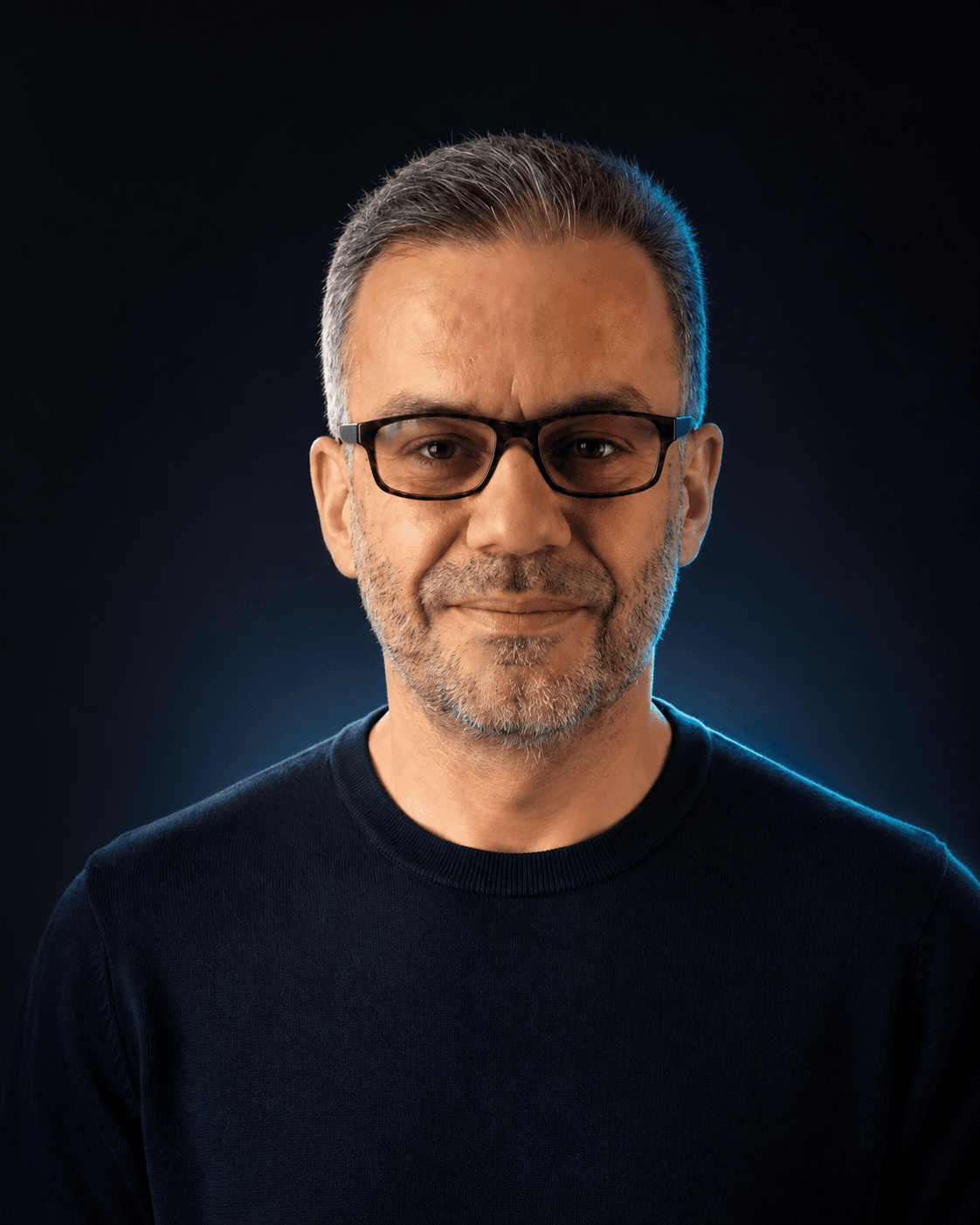
Portrait of Masoud Zeynali

Masoud’s career began in hands-on IT support, troubleshooting, and network operations, building a practical foundation across Windows client environments, Active Directory support, Group Policy, and organization-wide incident resolution. His responsibilities later expanded into the design and management of enterprise network infrastructure, administration and security of enterprise server environments, and centralized endpoint operations across more than 300 Windows endpoints.

As his responsibilities grew, Masoud moved into IT leadership and departmental responsibility, leading infrastructure development planning, defining the organization’s technology roadmap, supervising critical technology projects, and guiding more than 15 technical staff and specialists across network, security, help desk, and infrastructure functions. Today, nearly two decades of enterprise IT, infrastructure governance, and network security leadership serve as the foundation for his current engineering direction as a Senior AI Engineer—focused on AI agents, Model Context Protocol (MCP), infrastructure automation, and secure AI-assisted operational workflows.

ENGINEERING DISCIPLINES & PRINCIPLESCORE TENETS
INFRA::RELIABILITY
RELIABILITY

Infrastructure should remain stable and operational.

SECURITY::DESIGN
SECURITY

Infrastructure and network decisions should be security-conscious.

OPS::AUTOMATION
AUTOMATION

Recurring operational processes should be automated where appropriate.

LEADERSHIP::OUTCOMES
LEADERSHIP

Technical decisions should translate into practical organizational outcomes.

02 / CAREER|PROFESSIONAL TRAJECTORY

CAREER JOURNEY & LEADERSHIP PROGRESSION

Continuous progression across nearly two decades of professional IT experience, advancing from hands-on IT support and network operations to infrastructure ownership and departmental leadership.

Tehran Raymand Consulting Engineers
2007 — Present
Tehran, Iran
STAGE 01 · OPERATIONAL FOUNDATION
6 years

Help Desk and Network Support Specialist

Built a hands-on support foundation through technical troubleshooting, network infrastructure support, Active Directory services, and Windows client environments.

KEY RESPONSIBILITIES & SCOPE:
  • Technical support and advanced troubleshooting for network infrastructure, Active Directory services, and Windows client environments.
  • Implementation and management of centralized Group Policy Objects (GPO) and resolution of organization-wide hardware and software incidents.
  • Handling user requests and support tickets while improving the consistency, response quality, and reliability of IT support services.
STAGE 02 · INFRASTRUCTURE OWNERSHIP
7 years

Network Manager

Designed, implemented, and managed the company’s network architecture while maintaining the availability, stability, and security of critical internal services.

KEY RESPONSIBILITIES & SCOPE:
  • Administration and security of enterprise server environments, including Microsoft Exchange and MDaemon.
  • Sophos Firewall administration for traffic control, monitoring, NAT, policy enforcement, and perimeter protection.
  • Centralized administration of more than 300 Windows endpoints, including patch management, software distribution, and automation through ManageEngine Endpoint Central.
VERIFIED SCALE:300+ Windows endpoints
STAGE 03 · IT LEADERSHIP
Last 5 years — Present

Deputy Head of Information Technology Department

Leads the IT department, plans infrastructure development, defines the organization’s technology roadmap, and supervises critical technology projects while contributing to resource allocation, IT budgeting, and technology lifecycle oversight.

KEY RESPONSIBILITIES & SCOPE:
  • Direct supervision, evaluation, and guidance of more than 15 employees, senior specialists, and technical professionals across network, security, help desk, and infrastructure functions.
  • Infrastructure development planning, technology roadmap definition, and oversight of critical technology projects.
  • Resource allocation, contribution to IT budgeting, technology asset lifecycle oversight, and development of the team’s technical capabilities.
VERIFIED SCALE:15+ technical staff and specialists
03 / EXPERTISE|TECHNICAL MATRIX

TECHNOLOGY LANDSCAPE

A structured engineering matrix spanning enterprise platforms, network security, messaging, edge and cloud infrastructure, endpoint governance, and senior AI engineering across agents and Model Context Protocol (MCP).

01DOMAIN

INFRASTRUCTURE & PLATFORMS

Administration and operation of Windows Server and Linux environments, with Active Directory, Group Policy, Docker, and supporting enterprise services.

  • Windows Server
  • Linux
  • Active Directory
  • Group Policy
  • Docker
02DOMAIN

NETWORKING & SECURITY

Network security and traffic administration spanning firewall policy, NAT, DNS, SSH, defensive controls, network monitoring, and connectivity technologies.

  • Sophos Firewall
  • NAT
  • DNS
  • SSH
  • Fail2ban
  • Network Monitoring
  • V2Ray / VLESS
03DOMAIN

MESSAGING & COLLABORATION

Administration of enterprise messaging environments and secure mail infrastructure across Microsoft Exchange, MDaemon, Mailcow, and SSL/TLS certificate operations.

  • Microsoft Exchange
  • MDaemon
  • Mailcow
  • SSL / TLS
04DOMAIN

WEB & CLOUD

Linux web services and cloud-based traffic management using Nginx, Caddy, Cloudflare DNS, Cloudflare Workers, redirects, and domain forwarding.

  • Nginx
  • Caddy
  • Cloudflare DNS
  • Cloudflare Workers
  • Redirects
  • Domain Forwarding
05DOMAIN

ENDPOINT OPERATIONS

Centralized Windows endpoint administration at 300+ device scale, covering patch management, software distribution, automation, and operational control with ManageEngine Endpoint Central.

  • ManageEngine Endpoint Central
  • Windows Endpoints
  • Patch Management
  • Software Distribution
  • Endpoint Automation
VERIFIED SCALE:300+ WINDOWS ENDPOINTS
06DOMAIN

AI ENGINEERING, AGENTS & MCP

Senior AI engineering focused on agentic systems, Model Context Protocol (MCP), LLM-assisted infrastructure operations, operational reasoning, and automation across modern infrastructure workflows.

  • AI Agents
  • Agentic Workflows
  • Model Context Protocol (MCP)
  • Large Language Models
  • LLM Integration
  • Infrastructure Automation
  • Operational Reasoning
  • Log Analysis
  • AI-assisted Troubleshooting
  • Tool Integration
  • Context Engineering
  • Scripting & Automation
04 / SELECTED WORK|CASE STUDY

ENGINEERING IN PRACTICE

Selected engineering work illustrating AI engineering at the infrastructure boundary—where systems operations, security controls, and agentic workflows converge.

PROJECT 01 / FEATURED/CASE DOSSIER

InfraForge

Agentic Infrastructure Operations via Model Context Protocol (MCP)

PERSONAL ENGINEERING PROJECTACTIVE DEVELOPMENT
VIEW REPOSITORY

THE PROBLEM

AI-assisted infrastructure tooling becomes significantly more useful when it can understand real server environments, but direct and unrestricted infrastructure access introduces serious security and operational concerns. InfraForge explores a controlled interface between AI-assisted workflows and Linux infrastructure, with an emphasis on least privilege, structured discovery, and explicit operational boundaries.

SYSTEM INTENT

InfraForge is designed as an MCP-oriented infrastructure server/tool that can represent servers, support controlled discovery and inventory workflows, and provide a foundation for AI-assisted infrastructure interaction without treating unrestricted shell access as the default operating model.

CONCEPTUAL ARCHITECTURE/INTEGRATION FLOW
FIVE-NODE CONCEPTUAL BOUNDARY
  1. NODE 01
    AI / MCP CLIENT
    ASSISTED WORKFLOW
  2. NODE 02
    INFRAFORGE
    CONTROL & CONTEXT LAYER
  3. NODE 03
    SERVER ACCESS
    RESTRICTED SSH INTERFACE
  4. NODE 04
    LINUX INFRASTRUCTURE
    SERVER TARGETS
  5. NODE 05
    DISCOVERY & INVENTORY
    STRUCTURED INFRASTRUCTURE CONTEXT
ENGINEERING PRINCIPLES/OPERATIONAL BOUNDARIES
FOUR PROJECT TENETS
PRINCIPLE::01

LEAST PRIVILEGE

Infrastructure access should expose only the capabilities required for the intended operational task.

PRINCIPLE::02

CREDENTIAL HYGIENE

Credentials, private keys, and sensitive access material are treated as protected data that should remain outside normal operational logs.

PRINCIPLE::03

CONTROLLED ONBOARDING

Server onboarding establishes explicit access boundaries and predictable monitoring behavior rather than relying on unrestricted administrative sessions.

PRINCIPLE::04

AUTOMATION WITH GUARDRAILS

Repetitive infrastructure workflows can be automated while preserving explicit boundaries around access and operational scope.

DEVELOPMENT SCOPE/VERIFIED TECHNOLOGIES
SCOPE BOUNDARY
  • Go
  • Model Context Protocol
  • SSH
  • Linux
  • PowerShell
  • Infrastructure Inventory
  • Inventory Reconciliation
  • Server Onboarding
  • Automation
ENGINEERING NOTES & SECURITY CONSTRAINTS/IMPLEMENTATION FOCUS
SAFE ARCHITECTURAL SCOPE

SERVER ONBOARDING

A dedicated `infra` monitoring account is configured with restrictive SSH controls as part of the project's least-privilege onboarding approach. Restrictive SSH controls reduce unnecessary session capabilities for the monitoring account.

INVENTORY RECONCILIATION

Structured reconciliation work focuses on maintaining a consistent representation of discovered infrastructure as server inventory changes over time.

SECURITY DESIGN REQUIREMENTS

  • Administrative and MCP client authentication boundaries
  • Protection of SSH credentials and private key material
  • Treatment of sensitive access material outside operational logs
  • Restrictive least-privilege server access model
  • Network access restrictions and operational boundaries
  • Controlled server onboarding and lifecycle behavior
GOVERNANCE: DESIGN CONSTRAINTS & REQUIREMENTS
SYSTEMS ARCHITECTURE|MCP & CONTROL BOUNDARIES|

AI AGENTS AT THE INFRASTRUCTURE BOUNDARY

Architectural analysis of Model Context Protocol (MCP) integration with Linux infrastructure—focusing on least-privilege operations, credential isolation, and explicit control boundaries.

OPERATIONAL CONTROL FLOW & ACCESS BOUNDARIES/MCP INTEGRATION PATTERN
  1. 01OPERATOR INTENT

    AI / MCP CLIENT

    Agent receives an infrastructure task and formulates structured MCP tool invocation requests.

  2. 02CONTROL & SCHEMA LAYER

    MCP SERVER BOUNDARY

    InfraForge validates tool inputs against structured schemas and enforces defined operational scope.

  3. 03ISOLATION & VALIDATION

    CREDENTIAL HANDLING

    Server-specific SSH credentials and keys are validated for the requested operation, avoiding persistent exposure in model context.

  4. 04INFRASTRUCTURE ACCESS

    LINUX TARGET INTERFACE

    Restricted SSH sessions execute the requested task, maintaining clear boundaries between monitoring and administrative workflows.

SECURITY & OPERATIONAL BOUNDARIES/DESIGN PRINCIPLES

Structured Tool Interface

EXECUTION CONTROL

Interactions rely on structured MCP tool contracts rather than treating unrestricted interactive shells as the default operating model.

Credential Hygiene & Isolation

ACCESS PROTECTION

SSH private keys and sensitive authentication material are treated as protected data and isolated from normal operational logs and agent prompts.

Monitoring & Administration Separation

LEAST PRIVILEGE

Read-only monitoring relies on restricted monitoring identities, while privileged administration requires separately validated and controlled access.

Controlled Telemetry & Log Handling

OBSERVABILITY

System metrics, service states, and journal outputs are handled with care to prevent sensitive configuration data from leaking into model context.

ARCHITECTURAL DESIGN DECISIONS/ENGINEERING JUDGMENT

Structured Tool Schemas vs. Direct Bash Execution

Allowing unrestricted command execution increases operational and injection risk. Enforcing structured tool schemas with explicit parameter constraints prioritizes predictability, auditability, and operational safety.

Per-Server Credential Validation vs. Centralized Agent Key Storage

Storing broad administrative keys in an open agent store creates a single point of failure. Implementing per-server credential validation and controlled enrollment helps contain the blast radius of operational actions.

05 / INTERACTIVE EXPERIENCE|BROWSER-ONLY SIMULATION

OPERATIONAL REASONING LAB

Explore how agentic requests translate into explicit operational boundaries, predictable system behavior, and safe AI-assisted infrastructure workflows.

SIMULATED INTERACTIVE DEMO

Browser-only demonstration. No live infrastructure connection, remote execution, application-level data request, or real server data is involved.

Select Scenario3 Scenarios Available
SCENARIO 01/STRUCTURED REASONING

DISCOVER INVENTORY

DISCOVERY
01 / REQUEST

Represent Linux infrastructure context as a structured inventory view.

02 / OPERATIONAL BOUNDARY

Remain within discovery and inventory scope. Do not treat unrestricted shell access as the default interaction model.

03 / EXPECTED SYSTEM BEHAVIOR

Represent infrastructure information as structured context that can be reviewed before any broader operational action is considered.

06 / CREDENTIALS & CONTACT|VERIFIED PROFESSIONAL RECORD

RESUME, CREDENTIALS & DIRECT CONTACT

A concise professional record combining verified credentials, education, and direct contact channels.

PROFESSIONAL RESUME

PDF / ENGLISH

Download the verified English professional CV used as a factual source for this portfolio.

MICROSOFT CERTIFICATIONS

  • MCSE: Server InfrastructureMicrosoft Certified Solutions Expert · Microsoft
    2012
  • MCSE: Cloud Platform and InfrastructureMicrosoft Certified Solutions Expert · Microsoft
    2016

EDUCATION

  • Master of Business Administration (MBA)University of Tehran
    IN PROGRESS
  • Associate Degree in Information Technology (IT)Karaj University

DIRECT CONTACT

Masoud Zeynali

Senior AI Engineer — Agents, MCP & Infrastructure

IT Manager | Network Infrastructure & Security Specialist

Tehran, Iran
MASOUD ZEYNALI :: SYSTEMS ENGINEERING
IT INFRASTRUCTURE · SECURITY · AI AUTOMATION© 2026

EVIDENCE LAYER

/
06 RECORDS
01 / 06·PROFESSIONAL RECORD
SELECTED

Enterprise IT & Infrastructure

CLAIM

Nearly two decades of enterprise IT and infrastructure engineering experience.

EVIDENCE BASIS

Professional timeline: Tehran Raymand Consulting Engineers, 2007–Present, across help desk and network support, network management, and IT department leadership.

DISCLOSURE

This reflects the professional record presented in this portfolio and CV; no independent third-party verification is claimed.

SOURCES
Download CV
02 / 06·PROFESSIONAL RECORD

Technical Team Leadership

CLAIM

15+ technical staff and specialists supervised.

EVIDENCE BASIS

Leadership scope includes network, security, help desk, and infrastructure staff and specialists within the IT department.

DISCLOSURE

This reflects the professional record presented in this portfolio and CV; no independent third-party verification is claimed.

SOURCES
Download CV
03 / 06·PROFESSIONAL RECORD

Windows Endpoint Operations

CLAIM

300+ managed Windows endpoints.

EVIDENCE BASIS

Endpoint administration experience includes centralized Windows endpoint management using Endpoint Central.

DISCLOSURE

This reflects the professional record presented in this portfolio and CV; no independent third-party verification is claimed.

SOURCES
Download CV
04 / 06·PROJECT EVIDENCE

AI Engineering · Agents · MCP

CLAIM

Engineering work focused on AI agents, Model Context Protocol (MCP), infrastructure automation, and operational reasoning.

EVIDENCE BASIS

InfraForge demonstrates MCP-enabled infrastructure tooling and AI-assisted operational workflows.

DISCLOSURE

Project evidence demonstrates engineering work; by itself, it does not independently establish employment duration or seniority.

SOURCES
Open GitHub Repository
05 / 06·PUBLIC PROJECT SOURCE

InfraForge

CLAIM

InfraForge — MCP-enabled infrastructure operations tooling.

EVIDENCE BASIS

The public GitHub repository and portfolio case study document the project's implementation and architecture.

DISCLOSURE

Repository contents are public project evidence; production usage or external adoption is not claimed unless explicitly documented.

SOURCES
Open GitHub Repository
06 / 06·OFFICIAL TRANSCRIPT

Microsoft Credentials

CLAIM

MCSE Server Infrastructure — 2012 · MCSE Cloud Platform and Infrastructure — 2016

EVIDENCE BASIS

The Microsoft Learn transcript is provided as the official credential source.

DISCLOSURE

Credential details should be interpreted exactly as shown in the linked Microsoft transcript.